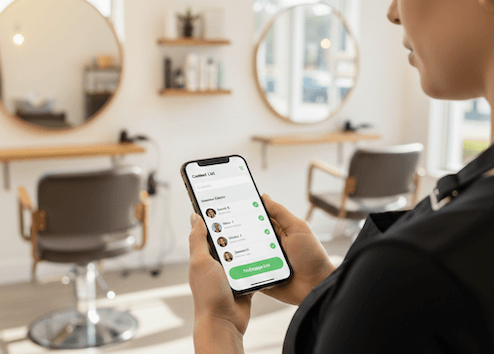
The money you're looking for isn't out there somewhere. It's hiding in your contacts.
Open your phone right now. Scroll through your contacts.
How many names do you see that used to be regulars? People who came in once or twice, maybe even for months, and then… vanished?
They didn’t leave a bad review. They didn’t complain. They just stopped booking.
If you’re like most small business owners, you’ve got dozens, maybe hundreds, of these “ghost clients” sitting in your phone. And here’s the thing: they’re not gone because they didn’t like you.
Life happened. They got busy. They forgot. Something else grabbed their attention.
But they still remember you. And with one simple text, you can bring them back.
Client reactivation is the process of re-engaging past customers who haven’t purchased from you or booked an appointment in a while. Instead of spending money on advertising to find new clients, reactivation focuses on reconnecting with people who already know, trust, and have paid you before.
For small service businesses—hair salons, tattoo studios, massage therapists, contractors, and others—client reactivation is one of the highest-ROI marketing activities you can do. It costs nothing, takes minutes, and often fills your calendar faster than any ad campaign.
When you need to fill your calendar, your first instinct is probably to find new clients. Run an ad. Post on social media. Hope someone finds you on Google.
But new clients are harder. They don’t know you. They don’t trust you. You have to convince them to take a chance.
Research consistently shows that reactivating past clients is significantly more effective than acquiring new ones:
Winning back an old client is easier than acquiring a new one. They just need a nudge.
The problem? Most business owners never send that nudge.
If reactivating old clients is so easy, why doesn’t everyone do it?
It feels awkward. You haven’t talked in months (or years). Reaching out feels weird, like texting an ex.
You don’t know what to say. You don’t want to sound desperate or pushy.
It takes time. Scrolling through contacts, remembering who’s who, typing individual messages… who has time for that?
You assume they left for a reason. You figure if they wanted to come back, they would have.
Here’s the reality: most clients don’t think about this nearly as much as you do. They’re not avoiding you. They just haven’t thought about you lately.
A simple “hey, it’s been a while” message doesn’t come across as desperate. It comes across as thoughtful. Personal. Like you actually care.
And that’s exactly what brings people back.
Timing matters. Here’s when client reactivation works best:
| Time Since Last Visit | Client Status | Expected Response Rate | Best Approach |
|---|---|---|---|
| 3-6 months | Warm | 25-40% | Simple check-in |
| 6-12 months | Cool | 15-25% | “Thinking of you” or new offering |
| 12-18 months | Cold | 8-15% | Seasonal prompt or special reason |
| 18+ months | Ice cold | 3-8% | Worth trying, lower expectations |
Here are copy-and-paste templates you can use today. Adjust them to fit your voice—the more it sounds like you, the better.
Best for: Clients you haven’t seen in 3-6 months
“Hi [Name], it’s [Your Name] from [Business]. It’s been a while! Just wanted to check in and see how you’re doing. If you ever want to book again, I’d love to see you. Hope all is good!”
Why it works: No pressure. No sales pitch. Just a human being friendly.
Best for: Clients you had a good rapport with
“Hey [Name]! You popped into my head today and I realized it’s been a minute. Hope everything’s going well with you! My schedule’s open if you ever want to come in. Would love to catch up.”
Why it works: It’s personal and warm. Feels like a friend, not a business.
Best for: When you have specific openings to fill
“Hi [Name]! Hope you’re doing great. I had a couple openings come up this week and thought of you. No pressure at all—just wanted to reach out in case the timing works. Let me know!”
Why it works: Creates a gentle sense of opportunity without being pushy.
Best for: When you’ve added services, skills, or made changes
“Hey [Name]! Wanted to let you know I’m now offering [new service/product]. I thought of you because [personalized reason]. Would love to have you back if you’re interested!”
Why it works: Gives a concrete reason for reaching out.
Best for: Natural transition points in the year
“Hi [Name]! With [season/holiday] coming up, I wanted to reach out and see if you’d like to get on the schedule. Things fill up fast this time of year! Let me know if you’d like me to save you a spot.”
Why it works: Creates urgency without being aggressive.
Best for: Clients who used to come frequently and suddenly stopped
“Hey [Name], I’ve missed seeing you! No pressure, just wanted you to know you’re always welcome back whenever you’re ready. Hope everything’s okay!”
Why it works: Acknowledges the relationship without making them feel guilty.
Avoid these common mistakes:
“We haven’t seen you in forever! Did we do something wrong?”
This puts them on the defensive and makes it awkward.
“Hey! We’re offering 20% off to get you back in!”
This signals desperation and attracts price-sensitive clients. Save discounts for special occasions, not reactivation.
“Dear Valued Customer, we miss your business!”
People can smell a form letter. Keep it personal.
One message is enough. If they don’t respond, wait a few months before trying again. Nobody wants to feel stalked.
One-time outreach helps, but a consistent system fills your calendar month after month.
Once a month, spend 15-20 minutes:
That’s it. 15 minutes a month can generate hundreds (or thousands) in revenue.
Whenever you notice your schedule looking light:
This turns a slow day into a productive outreach session.
Organize your clients into simple groups:
Focus most of your energy on the warm and cold segments—they have the best ROI.
Keep it simple. You don’t need fancy software. A note in your phone or a basic spreadsheet works:
| Client Name | Last Visit | Date Contacted | Response | Rebooked? |
|---|---|---|---|---|
| Sarah M. | Aug 2024 | Jan 5 | Yes – booked | ✓ |
| Mike T. | June 2024 | Jan 5 | No response | — |
| Lisa R. | Sept 2024 | Jan 5 | “Maybe next month” | Follow up Feb |
Let’s be realistic: not everyone will reply.
Typical response rates for reactivation messages:
Even modest response rates generate significant revenue.
Example scenario:
That’s an effective hourly rate of $600/hour for your reactivation time—far better than almost any other marketing activity.
Here’s how real small business owners word their reactivation messages:
Hair Stylist:
“Hey girl! It’s been a minute! Hope everything’s good with you. If you need a refresh, I’ve got some openings next week. Would love to see you! 💇”
Tattoo Artist:
“Hey [Name], hope you’re doing well! Your piece healed up nicely I hope? I’ve got some availability coming up if you’re thinking about adding to it. Let me know!”
Massage Therapist:
“Hi [Name]! I hope you’re doing well. It’s been a while since your last appointment—I have some openings this week if you could use some stress relief. Take care!”
Contractor:
“Hi [Name], it’s [Name] from [Business]. Hope the [previous project] is still holding up great! Let me know if you have any other projects coming up—I’d be happy to help.”
Personal Trainer:
“Hey [Name]! Hope 2025 is treating you well. I’ve got some training slots open if you want to get back into a routine. No pressure—just wanted to reach out. Let me know!”
Notice the pattern: friendly, casual, low-pressure, personal.
Wait at least 3 months since their last visit before sending a reactivation message. This gives enough time for them to naturally return on their own while not waiting so long they forget you.
Don’t follow up immediately. Wait 3-4 months, then try once more with a different template. If they still don’t respond, wait 6+ months before trying again. Some clients will never respond, and that’s okay.
Generally, no. Discounts attract price-sensitive clients and signal desperation. Instead, focus on the relationship and convenience. Save discounts for special occasions like anniversaries or holidays.
Start with 10-20 messages per month. This is manageable, allows for personalization, and generates meaningful results without overwhelming you or your past clients.
Tuesday through Thursday, mid-morning (9-11 AM) or early evening (5-7 PM) typically see highest response rates. Avoid Monday mornings and Friday afternoons when people are least responsive.
It might feel awkward to you, but clients rarely think it’s weird. Most appreciate the personal touch and are happy to hear from you. The awkwardness is almost entirely in your head.
Here’s something you can do right now:
Seriously—do it right now. It takes 5 minutes.
The hardest part is starting. Once you see it work, you’ll make it a habit.
The revenue you’re looking for isn’t hiding on social media or in expensive ads. It’s sitting in your phone—dozens or hundreds of people who already know, like, and trust you.
Client reactivation is:
Stop ignoring your “dead” client list. Start reaching out today.
One text. That’s all it takes to turn an old client into this week’s appointment.
If scrolling through contacts and texting people one by one sounds exhausting, there’s an easier way.
GoReminders lets you message a whole group of past clients at once. Clients see their own name and feel like you reached out just to them.
You can fill your slow weeks without spending hours on your phone.
Try GoReminders free for 14 days – no credit card required.

 Appointment Reminders
 Text Reminders
 Calendar
 Appointment Confirmations
 Appointment Booking
 Text Blasts
 Accept Deposits & Payments
 Home Services
 Construction & Contractors
 Medical & Dental
 Wellness & Beauty
 Insurance Agents
 Real Estate
 Professional Services
 Automotive & Boat
 Education
 All Industries
 Reviews & Testimonials
 Case Studies
 Blog
Blog Integrations
 Contact Us
 Help Articles
 About Us